Just offshore from Marengo Beach, immediately south of Apollo Bay, lies one of the most ecologically rich and culturally significant marine environments on the Great Ocean Road — the Marengo Reefs Marine Sanctuary.
Often overlooked by visitors focused on the coastline above the waterline, this marine sanctuary protects an extraordinary underwater world shaped by ancient rivers, powerful ocean currents and long-standing cultural care.

Sea Country & the Eastern Maar connection
Interpretive signs along this coastline acknowledge that this area is Sea Country, cared for by the Eastern Maar people for tens of thousands of years.
This coastline holds deep cultural significance, shaped by stewardship, sustainable harvesting and ceremony. Evidence of this enduring connection remains today in the form of shell middens and camping places found along the shore.
Sea Country is often described as the cradle of life, reflecting the deep interconnection between people, land and sea.
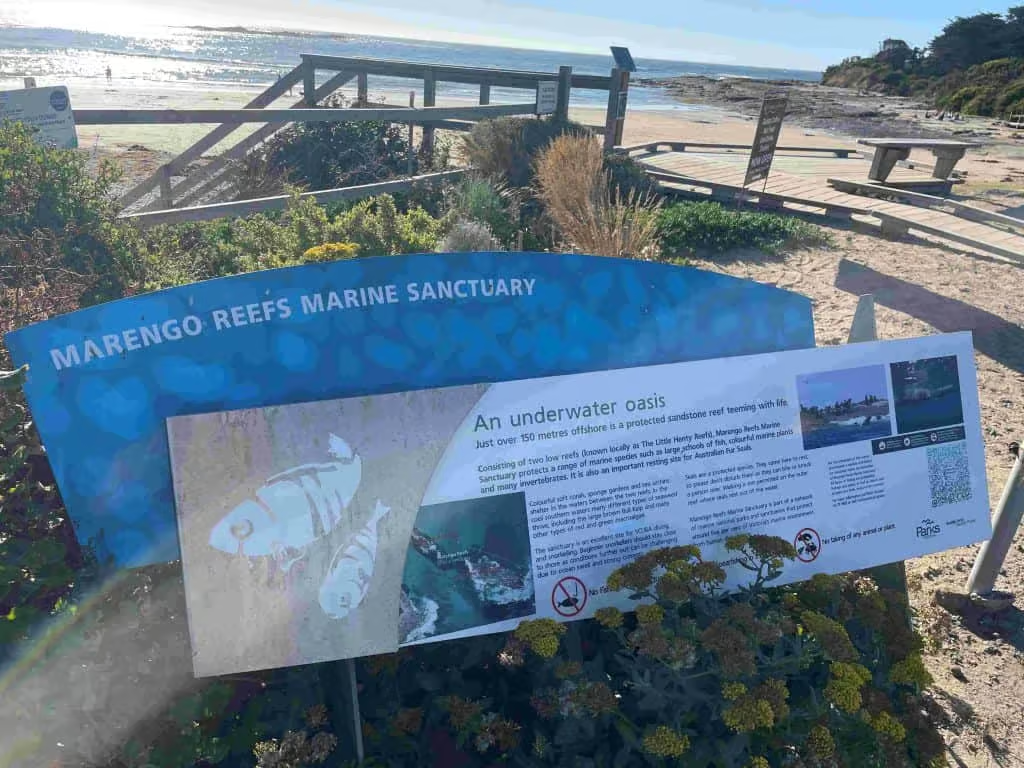
Marengo Reefs Marine Sanctuary – an underwater oasis
The Marengo Reefs Marine Sanctuary protects a series of sandstone reefs located just offshore from Marengo Beach. These reefs are known locally as the Henty Reefs and form part of Victoria’s network of marine sanctuaries.
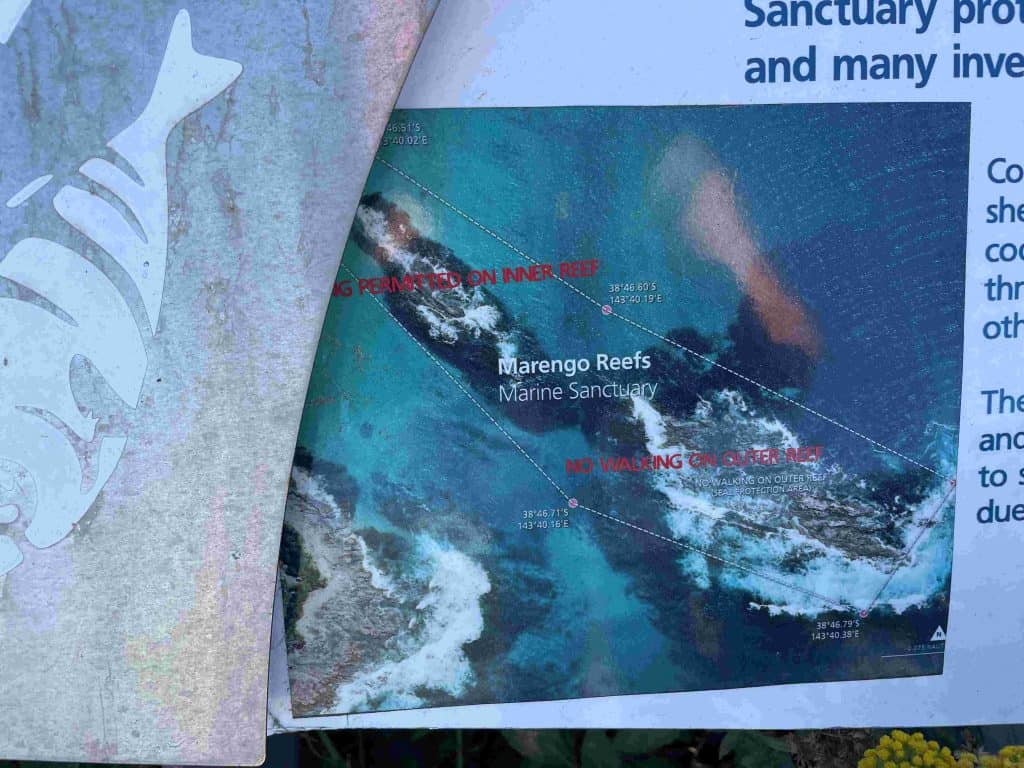
Despite their proximity to shore, the reefs support a thriving marine ecosystem, including marine plants, fish, invertebrates and visiting marine mammals. The reef is an important resting and breeding area for Australian fur seals.
As a designated marine sanctuary, the area is fully protected. Fishing, collecting and standing on the reef are not permitted, helping preserve this important habitat for marine life.
Why this coastline is so rich in marine life
The diversity of marine life along the Apollo Bay and Marengo coastline is driven by dramatic underwater geography. Changes in depth, rugged seabed features and strong ocean currents create nutrient-rich conditions that support a wide range of species.
These conditions attract fish, seabirds and marine mammals, including dolphins and seals, as well as seabirds such as gannets, shearwaters and albatrosses.

A global biodiversity hotspot
Southeast Australia is recognised as one of the most diverse marine regions in the world, with many species found nowhere else. Areas like the Marengo Reefs Marine Sanctuary are often described as biodiversity hotspots, where marine life flourishes within a relatively small area.
Seafloor mapping has revealed underwater features that mirror the landscapes of the Otway Ranges above, creating a strong ecological connection between land and sea.
Bass Strait & the Shipwreck Coast
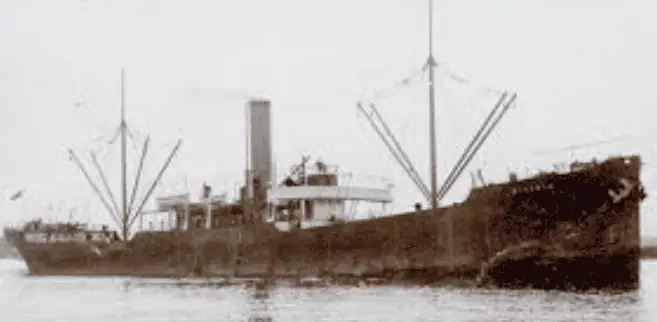
Bass Strait is one of the most powerful and complex marine environments in Australia. Strong Southern Ocean swells interact with underwater terrain to produce the dramatic wave conditions that shaped the Shipwreck Coast.
Numerous shipwrecks lie offshore, including the MS City of Rayville, America’s first World War II casualty, which struck a mine in 1940 and now rests protected within the Apollo Marine Park.
Kayaking with seals at Marengo Reefs Marine Sanctuary
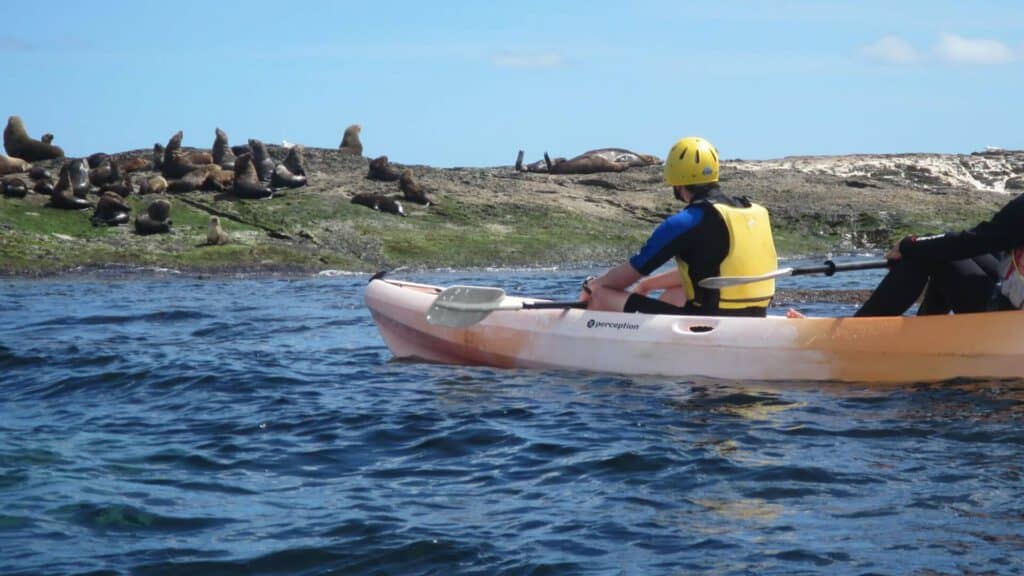
One of the best ways to experience the Marengo Reefs Marine Sanctuary is from the water. Apollo Bay Surf & Kayak operate guided kayak tours offshore from Marengo Beach.
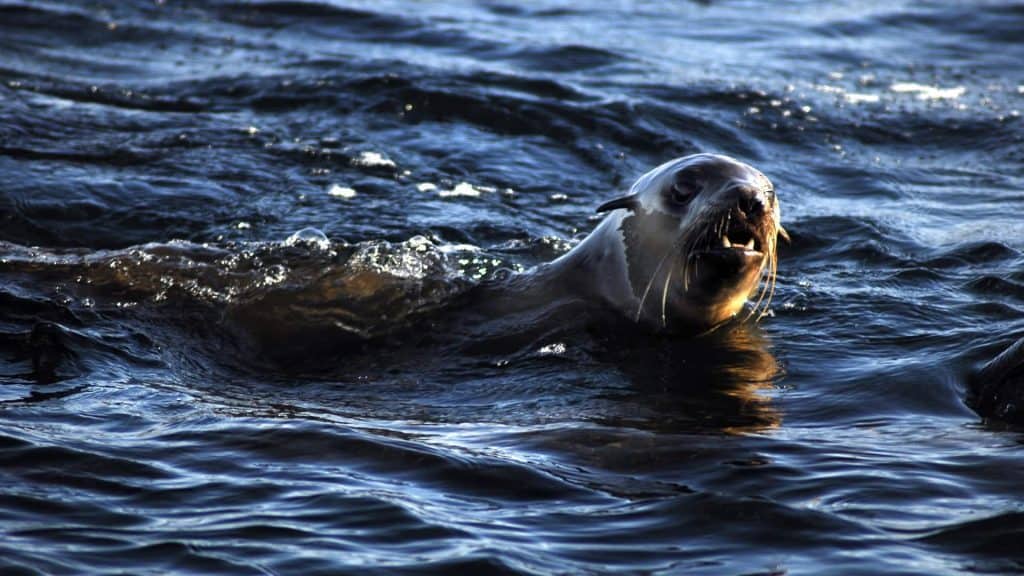
The reef supports a large Australian fur seal colony, with more than 100 seals using the area. From kayaks, seals are often seen swimming, resting on the reef or interacting playfully in the water. Seabirds regularly sit on the reef, and seal pups may be present at certain times of year.
Because the sanctuary is fully protected, landing on or standing on the reef is not permitted. Guided kayak tours are strongly recommended, as licensed operators understand seal behaviour and sanctuary rules and maintain respectful distances at all times.
From land, seals are more commonly seen swimming near the shoreline or resting on beaches or around Apollo Bay Harbour. Seals hauled out on the reef itself are generally too far offshore to see clearly, except in rare conditions of very low tide and calm swell.
Walking this coastline on the Great Ocean Walk
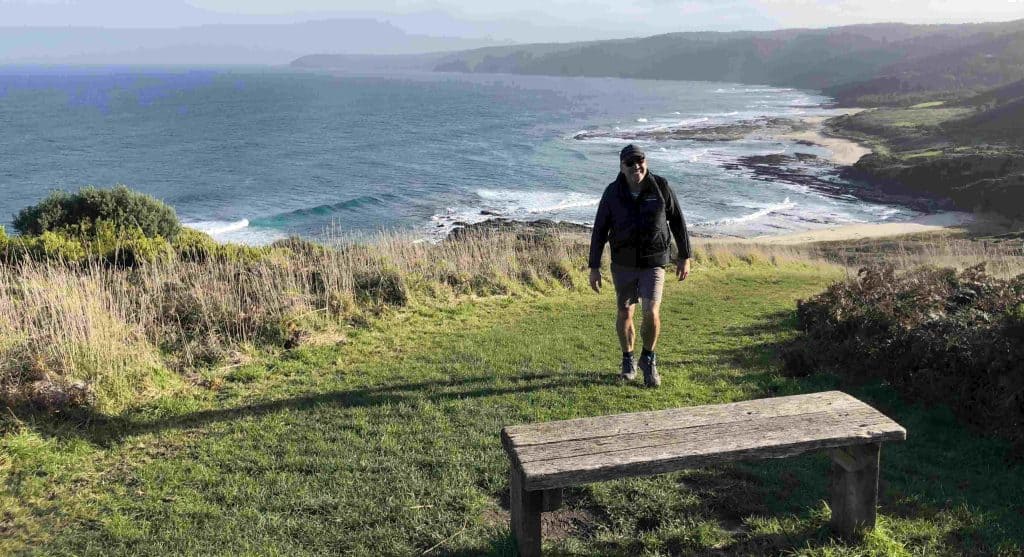
The Marengo Reefs Marine Sanctuary sits directly offshore from one of the most accessible sections of the Great Ocean Walk.
The walk begins in Apollo Bay, where walkers can start along the beach or follow the coastal footpath beside the Great Ocean Road. From here, the trail leads directly to Marengo, with constant coastal views.
- Apollo Bay to Marengo Seal Sanctuary – approximately 3 km (easy)
From Marengo, the walk passes through the Marengo Holiday Park and continues towards Shelly Beach.
- Marengo to Shelly Beach – approximately 6 km (medium)
Beyond Shelly Beach, the track leaves the open coastline and heads inland through coastal forest, continuing on towards Blanket Bay.
Shelly Beach to Blanket Bay – approximately 13.5 km
Linking this walk with Marengo and the easiest section of the Great Ocean Walk
This stretch of coastline connects neatly with two of the most accessible short walks near Apollo Bay.
The section from Apollo Bay to Marengo and on to Shelly Beach is widely regarded as the easiest section of the Great Ocean Walk, making it ideal for first-time walkers or those short on time.
You can read more about this walk here:
👉 The easiest section of the Great Ocean Walk – Apollo Bay to Shelly Beach via Marengo
https://walk91.com.au/blog/the-easiest-section-of-the-great-ocean-walk-apollo-bay-to-shelly-beach-via-marengo/
As you approach Marengo, there is also the option to explore the Marengo Nature Conservation Reserve, located on the opposite side of the Great Ocean Road. Before reaching the entrance gate to the Marengo Holiday Park, walkers can cross the road to access the reserve and enjoy a quieter bushland walk away from the coast.
If you wish to continue on the Great Ocean Walk, remain on the beachside of the road and follow the track through the Marengo Holiday Park, emerging on the far side to continue towards Shelly Beach.
For more detail on this alternative short walk, see our guide to:
👉 Exploring Marengo Nature Conservation Reserve close to the Great Ocean Walk
https://walk91.com.au/blog/explore-marengo-close-to-the-great-ocean-walk-walk91/
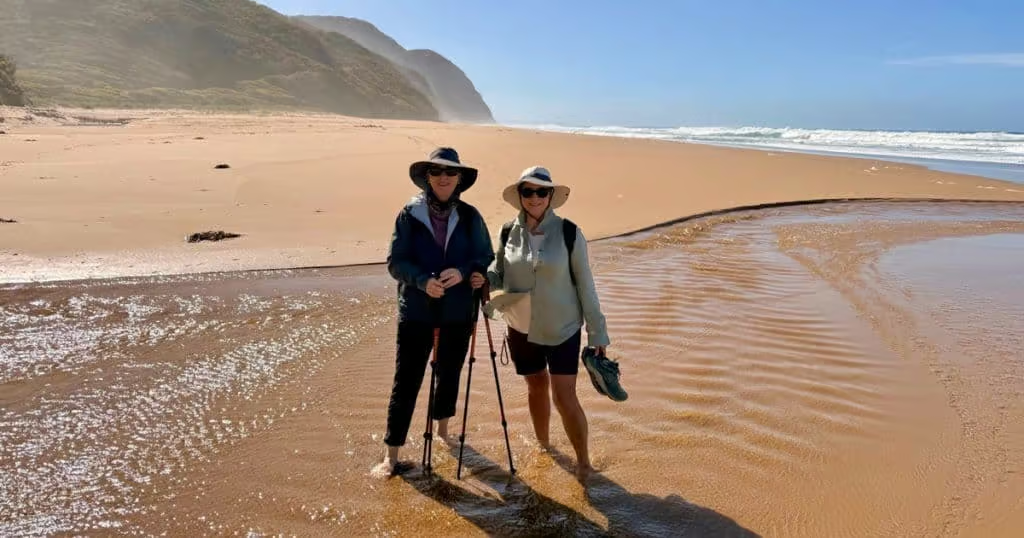
Extending your walk beyond Marengo
For walkers wanting more than a short coastal stroll, this section of the Great Ocean Walk forms the opening stages of several popular multi-day hikes.
A well-known option is the three-day Apollo Bay to Castle Cove walk, which follows:
- Day 1: Apollo Bay to Blanket Bay
- Day 2: Blanket Bay to Cape Otway Lighthouse
- Day 3: Cape Otway Lighthouse to Castle Cove

This walk offers a medium-grade introduction to the Great Ocean Walk and showcases coastal scenery, forest tracks and historic landmarks.
This same opening section is also included in Walk91’s 6-day, 7-day and 10-day Great Ocean Walk itineraries, making Apollo Bay an ideal starting point for walks of varying lengths.
FAQ:
The Marengo Reefs Marine Sanctuary is located just offshore from Marengo Beach, immediately south of Apollo Bay on the Great Ocean Road.
No. As a designated marine sanctuary, fishing, collecting and standing on the reef are not permitted.
You may occasionally see seals swimming near the shoreline or resting on beaches or around Apollo Bay Harbour. Seals that haul out on the reef itself are generally too far offshore to see clearly from land.e transport at either end.
Yes. The Apollo Bay to Marengo section of the Great Ocean Walk is an easy walk of approximately 3 kilometres, suitable for most fitness levels.
The walk from Marengo to Shelly Beach is approximately 6 kilometres and is considered a medium-grade walk.
Yes. Popular options include the three-day Apollo Bay to Castle Cove walk, as well as longer 6-day, 7-day and 10-day Great Ocean Walk itineraries, all of which start with this section of the trail.
CONTACT US to start planning your Great Ocean Walk Adventure!
T: +61 3 5237 1189 Or BOOK A CALL Email: info@walk91.com.au
About the Author
Walk91 is a locally owned Great Ocean Walk operator based in Apollo Bay, Victoria. Our team lives and works on the Great Ocean Road and provides self-guided Great Ocean Walk support throughout the walking season, drawing on first-hand knowledge of trail conditions, logistics, and safety planning.