Quick answer: On the Great Ocean Walk you’ll mainly see two animals. Eastern Grey Kangaroos live in groups (called mobs) on the open grassy sections, and are easiest to spot early morning or late afternoon.
Swamp Wallabies are smaller, darker, and solitary, and they keep to the forest. The walk runs 104km from Apollo Bay to the Twelve Apostles, through both grassland and forest, which is why you get to see both.
One of our guides, Brad, sums it up better than any field guide:
“Kangaroos live in a mob, so they have a family. Swamp wallabies, I call them the sole operators. It’s pretty rare that you see two or even three together.”

What’s the difference between a kangaroo and a wallaby?
The simplest way to tell them apart: size, colour, and company. Kangaroos are bigger, lighter in colour, and travel in groups. Wallabies are smaller, darker, and usually alone.
Where they live is the other giveaway. Kangaroos like open grassland. Wallabies stick to thick bush and forest. So if you see a single small animal slipping through the tree ferns, that’s a wallaby. A group of larger animals out on the grass, that’s a mob of kangaroos.
What kind of kangaroos live on the Great Ocean Walk?
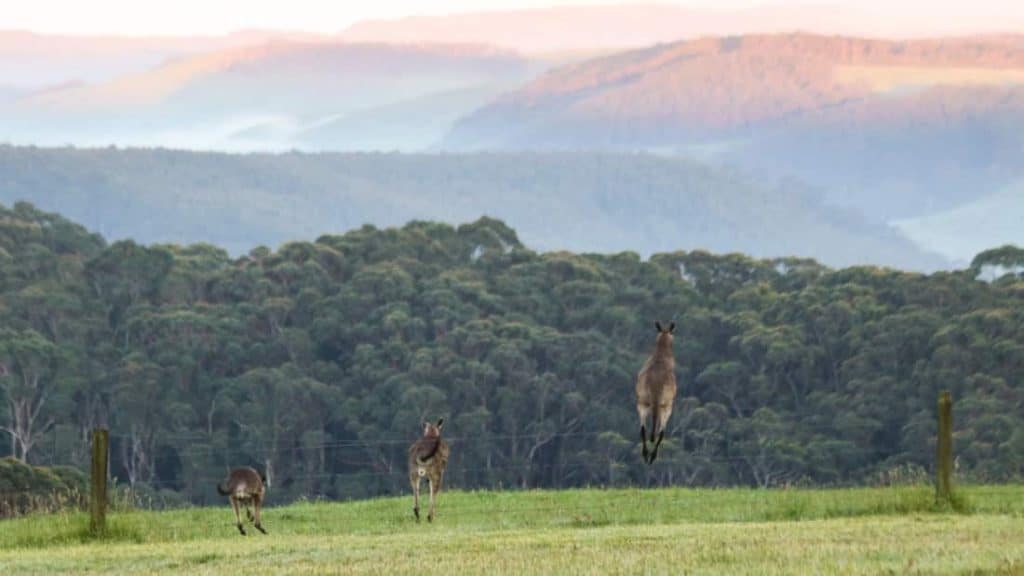
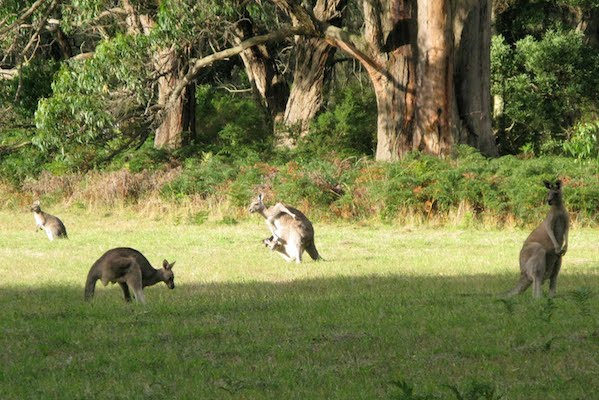
The kangaroo you’ll see here is the Eastern Grey. Pale belly, grey-brown coat, and almost always in a group. That group is called a mob, and it works a lot like a family.
There’s a bit of drama to it, too. Young males will challenge the older male for the mob. When one of them wins, he hops past the old fella and takes over. So now and then you’ll spot a lone old kangaroo out on his own. Brad calls him “old man kangaroo.”
“It’s a bit sad that he’s been kicked out of his family. I always feel a bit sorry for them. I know a couple of men like that too.”
You’ll have the best luck spotting kangaroos on the open grassy sections of the trail, early in the morning or late in the afternoon when they come out to feed.
What kind of wallabies will you see on the Great Ocean Walk?
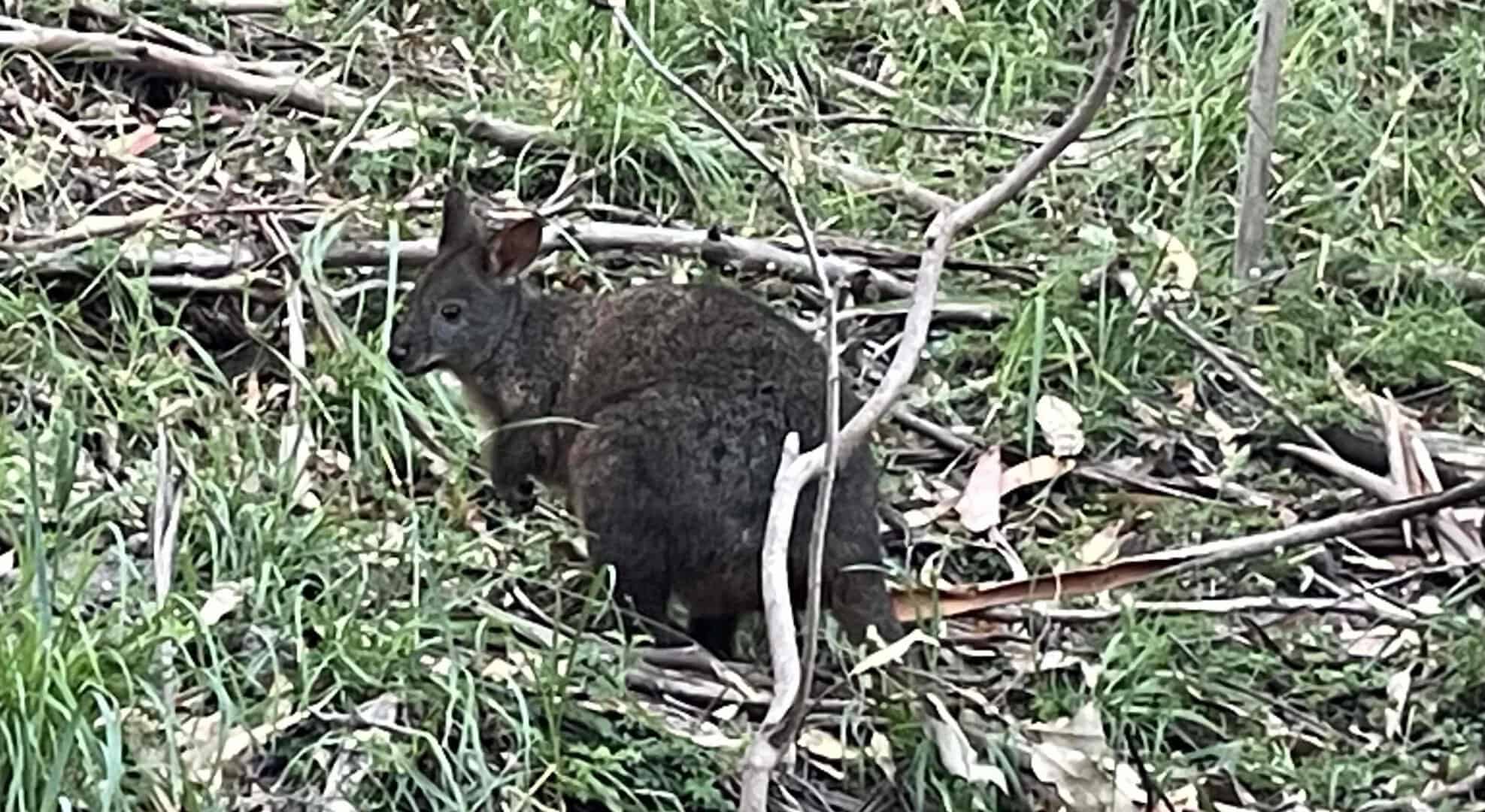
The one you’ll meet is the Swamp Wallaby. It’s smaller and darker than a kangaroo, and it keeps to itself. Where a kangaroo wants the open grass, a wallaby sticks to the bush. You’ll often catch one slipping quietly through the tree ferns in the forested parts of the walk, then gone before you’ve got your camera out.
A couple of things people don’t expect about them. They’re strong swimmers. And you’ll often see a mum with a joey tucked safely in her pouch. If you spot a single animal moving through thick scrub on its own, odds are it’s a wallaby.
Where and when can you see kangaroos and wallabies on the Great Ocean Walk?
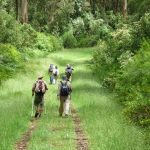
The Great Ocean Walk runs 104km from Apollo Bay to the Twelve Apostles, through Great Otway and Port Campbell national parks. That mix of grassland and forest is exactly why you get both animals along the way.
A few simple things lift your chances:
- Walk in the early morning or the late afternoon. That’s when both are most active.
- Slow down and keep quiet. Wildlife hears you long before you see it.
- Watch the edges, where forest meets grass. That in-between ground is where you’ll spot the most.
Spring is lovely for it, with joeys about. Through summer, the cooler ends of the day are your best bet.

If you are driving along the Great Ocean Road, where is the best place to see Kangaroos and Wallabies?
If you are driving along the Great Ocean Road and do not have time to walk the iconic Great Ocean Walk trail, the best place to spot kangaroos and wallabies is at the Wildlife Wonders conservation park.
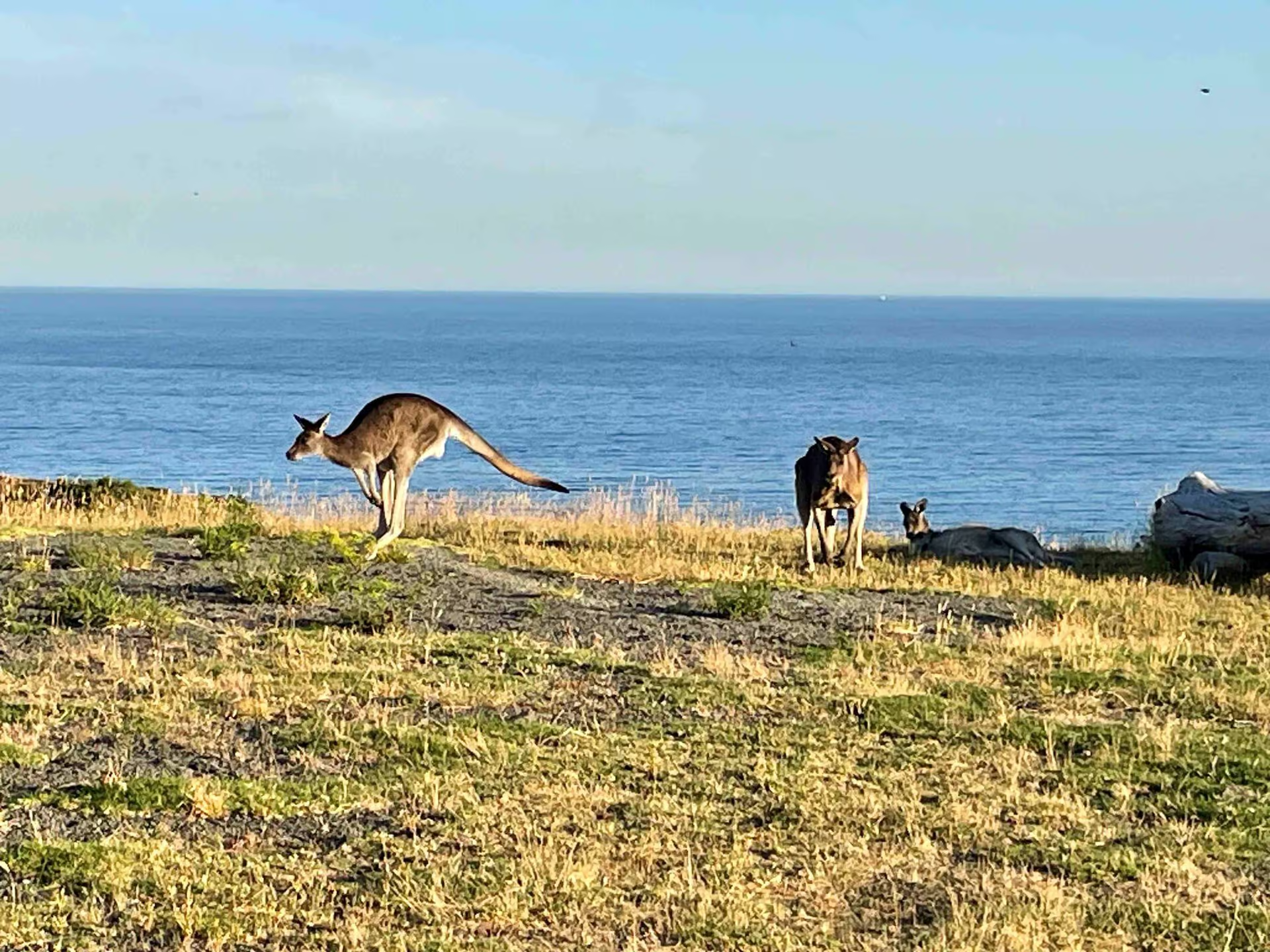
We took this photo at Wildlife Wonders in the afternoon when the kangaroos were grazing (and the wallabies were feeding). It was a great experience, and the views of the Great Southern Ocean were wonderful too!
And what is even more wonderful is that all profits go back into wildlife conservation across the Otways.
Walk it with someone who knows it
Half the fun is having someone like Brad point things out and tell you the story behind them. That local knowledge is what turns a nice walk into one you’ll remember.
If you’d like to see the kangaroos and wallabies for yourself, our self-guided walks give you the time to slow right down and enjoy it, with all the logistics handled for you. The 6-Day Whole Walk is our most popular, with a comfortable pace from one end of the trail to the other.
Want more on the local wildlife? Have a read of our full guide, Everything You Need to Know About the Great Ocean Walk’s Wildlife. And if you’ve got any questions at all, just get in touch. We’re always happy to help you plan.
Frequently Asked Questions :
Kangaroos are larger, lighter in colour, and live in groups on open grassland. Wallabies are smaller, darker, and usually travel alone through forest and thick bush.
Yes. Eastern Grey Kangaroos are common on the open grassy sections of the trail, most often seen early in the morning or late in the afternoon.
Yes. The Swamp Wallaby is common in the forested sections. They’re shy and solitary, so you’ll usually see one at a time slipping through the tree ferns.
Early morning and the last couple of hours before dark. Both animals come out to feed when it’s cooler, and the trail is quieter.
Yes, as long as you keep your distance and don’t feed or crowd them. They’re wild animals and will move off on their own if you give them space. Wallabies tend to be more timid than kangaroos.
CONTACT US to start planning your Great Ocean Walk Adventure!
T: +61 3 5237 1189 Or BOOK A CALL Email: info@walk91.com.au
About the Author
Walk91 is a locally owned Great Ocean Walk operator based in Apollo Bay, Victoria. Our team lives and works on the Great Ocean Road and provides self-guided Great Ocean Walk support throughout the walking season, drawing on first-hand knowledge of trail conditions, logistics, and safety planning.