The Shipwreck Coast of Victoria stretches for more than 230 kilometres between Torquay and Port Fairy, passing through iconic seaside towns such as Aireys Inlet, Lorne, Apollo Bay, Port Campbell, Peterborough and Warrnambool. Beneath its breathtaking beauty lies one of Australia’s most dramatic maritime histories — a coastline shaped as much by tragedy as by time and tide.
It’s widely regarded as one of the most beautiful and intimidating stretches of coastline in the country. While today’s visitors experience its wonder safely from land, the Shipwreck Coast earned its name through the unforgiving conditions faced by early sailors navigating these waters.
Local Insight from Walk91
This guide is written by the Walk91 team, locals based in Apollo Bay who live and work on the Great Ocean Walk. We support walkers on this trail each walking season and share practical, first-hand knowledge to help you plan safely and confidently.

Relics of the Shipwreck Coast
Remnants of the many shipwrecks that line this coast can still be found today — some visible from shore, others hidden beneath the waves. Walking sections of the Great Ocean Walk brings you close to places where history unfolded dramatically, often within sight of the trail itself.
Each wreck carries its own story, but one question is asked more than any other: which shipwreck is the most famous?
That distinction almost universally belongs to the Loch Ard, wrecked just beyond the Twelve Apostles near what is now known as Loch Ard Gorge.

The Story of the Loch Ard
The Loch Ard was a clipper ship that departed England on 1 March 1878, bound for Melbourne. On board were 37 crew members and 17 passengers, along with a cargo of luxury goods destined for colonial Australia.
After battling rough seas, dense fog, and unreliable chronometers, the ship failed to sight the Cape Otway Lighthouse. Believing they were further offshore than they actually were, the crew unknowingly steered too close to land. When the fog lifted, the ship struck a reef and sank within just 15 minutes.
Of the 54 people on board, only two survived. Passenger Eva Carmichael clung to floating wreckage for more than five hours, while cabin boy Tom Pearce survived by holding onto the overturned hull of a lifeboat. After reaching shore, Tom heard Eva calling for help and bravely swam back out to rescue her.
Several items from the wreck were later recovered, including a grand piano that washed ashore in the gorge and a porcelain peacock, now displayed at the Flagstaff Hill Maritime Museum in Warrnambool.

Why the Shipwreck Coast is so Dangerous
Explorer Matthew Flinders once described this stretch of coastline by saying:
“I have seldom seen a more fearful section of coastline.”
The danger lies in a powerful combination of weather and geography. Strong winds surge up from the Southern Ocean, generating massive swells that relentlessly batter the limestone cliffs. Dense fog is common and often obscures landmarks — a deadly challenge for early sailors reliant on limited navigational tools.
These conditions led to countless miscalculations and ultimately prompted the construction of the Cape Otway Lighthouse, one of Australia’s most important coastal beacons. If you visit the lighthouse while walking the Great Ocean Walk and climb to the top of the tower, you’ll gain a striking sense of just how isolated and unforgiving this coastline once was — and still can be.
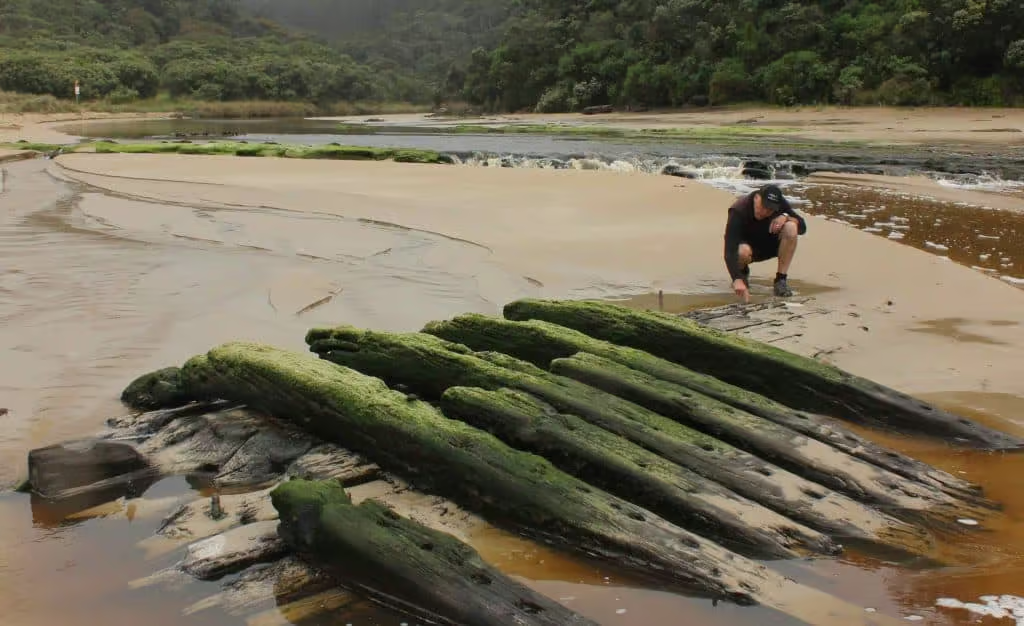
Shipwreck Stories You Encounter on the Great Ocean Walk
These stories serve as a powerful reminder of why tides, weather and swell still matter today. Understanding the landscape through both its history and its conditions adds depth to the walking experience and reinforces why careful planning remains essential along exposed coastal sections — particularly on beach and headland sections of the trail.
If you’re walking this part of the coast, we strongly recommend reading our guide to walking from Parker Hill to Cape Otway Lighthouse, which covers tides, safety and local tips for this exposed section of the Great Ocean Walk.

More Than Just a Walk
Exploring the Shipwreck Coast via the Great Ocean Walk offers far more than a scenic hike. The trail weaves together natural wonders, maritime history and living coastal communities.
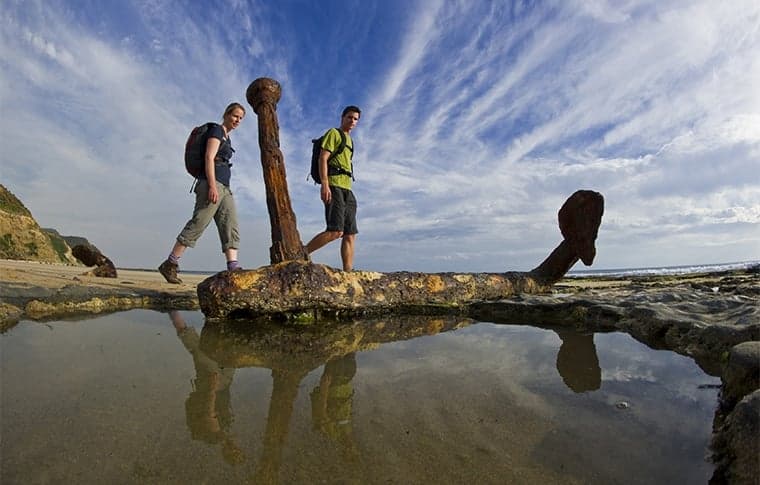
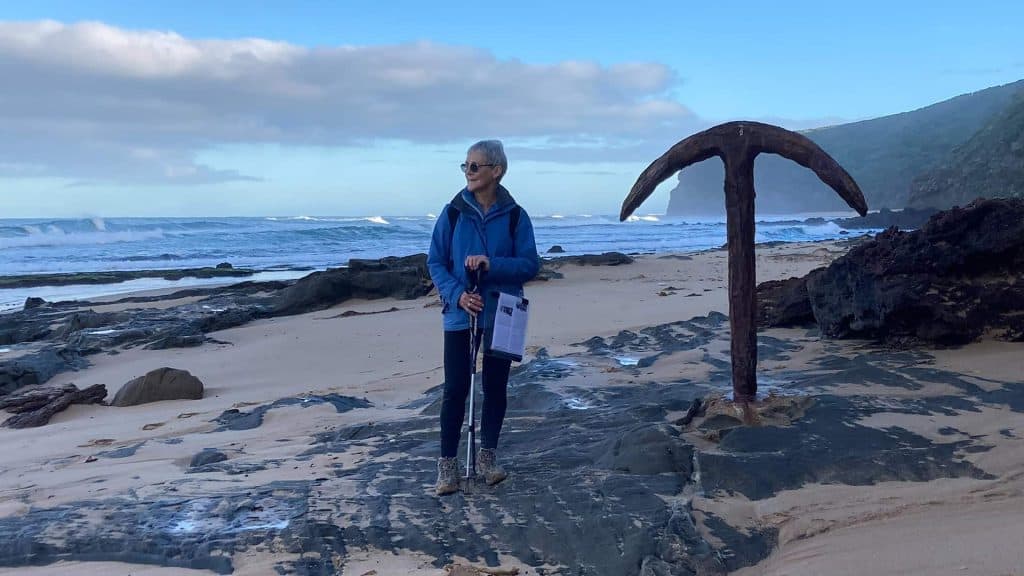
Along the route you’ll encounter dramatic landmarks such as the anchors on Wreck Beach, the Twelve Apostles, Loch Ard Gorge, and ever-changing limestone cliffs sculpted by wind and water. The towns along the way add cultural depth, with museums, galleries and interpretation centres that bring the region’s shipwreck history to life.
One standout is the Apollo Bay Museum, whose displays include washed-up artefacts and relics recovered from local shipwrecks. Apollo Bay is also unique along the Great Ocean Road as the only town with a working fishing harbour, keeping its maritime heritage very much alive today.
Beaches, Rest Stops and Coastal Calm
The western stretches of the Shipwreck Coast are dotted with beautiful beaches — perfect places to pause, rest tired legs or simply take in the scenery. Some are sheltered and calm, others wild and windswept, each offering a different perspective of the coast.
If conditions allow, it’s worth packing your bathers. A quiet beach stop can be one of the unexpected highlights of a multi-day walk.

A Year-Round Adventure on the Shipwreck Coast
There’s no off-season on the Shipwreck Coast. Each time of year offers a different experience — from calm summer days and long light-filled evenings to moody winter seas and dramatic skies.
Local events, markets and cultural festivals take place throughout the year in towns along the route, adding extra richness to a Great Ocean Walk experience no matter when you visit.

Flora and Fauna of the Great Ocean Walk
While the name Great Ocean naturally brings the sea to mind, the Great Ocean Walk also passes through forests, heathland and rugged clifftops teeming with wildlife.
The Shipwreck Coast attracts southern right whales, fur seals, penguins and a wide variety of seabirds. Between June and September, the Warrnambool whale nursery offers exceptional viewing opportunities, and migrating whales can often be seen directly from the trail.
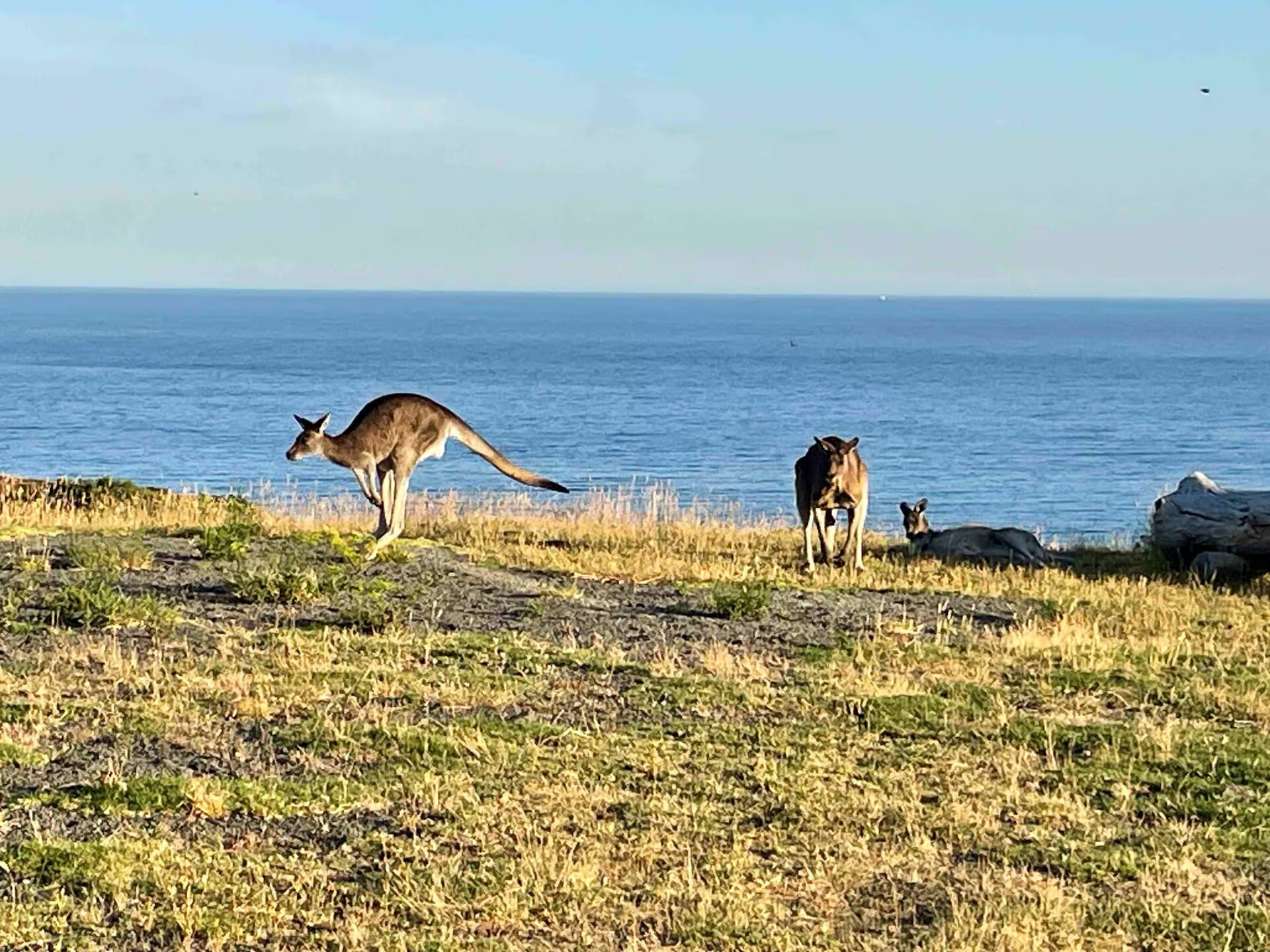
Inland, Great Otway National Park is home to koalas, wallabies, echidnas and rich birdlife, alongside towering forests and lush fern gullies. Walking through these landscapes is a reminder that this coastline is as ecologically rich as it is historically significant.
Walking Through History
From tragic shipwrecks to living coastal communities, the Shipwreck Coast is a place where nature and history are deeply intertwined. Walking this coastline allows you to experience its stories at a human pace — with time to absorb the scale, beauty and power of the landscape.
For those keen to explore the maritime history in more depth, there are many other shipwrecks scattered along this coastline — each with its own story of loss, survival and resilience. From dramatic groundings to remarkable rescue efforts, the Shipwreck Coast has played a defining role in Australia’s shipping history.
FAQs: The Shipwreck Coast & the Great Ocean Walk
The Shipwreck Coast earned its name due to the extraordinary number of vessels wrecked along this stretch of coastline. Powerful Southern Ocean swells, hidden reefs, dense fog and early navigation challenges led to around 700 ships being lost, making it one of Australia’s most dangerous historic shipping routes.
It’s estimated that around 700 ships were wrecked along the Shipwreck Coast, although only about 240 have been located and identified. Many wrecks remain undiscovered, buried beneath sand or broken up by relentless ocean forces.
The most famous shipwreck is the Loch Ard, which sank in 1878 near what is now known as Loch Ard Gorge, close to the Twelve Apostles. Of the 54 people on board, only two survived, making it one of Australia’s most tragic and well-documented maritime disasters.
Yes. While most wrecks are submerged, several shipwreck stories are closely tied to locations along the Great Ocean Walk. Walkers pass beaches, cliffs and headlands where ships were lost, and interpretation signs and nearby landmarks help bring these stories to life.
The Shipwreck Coast is safe for walkers who are prepared, but it remains a powerful coastal environment. Weather, tides and swell can affect certain sections of the Great Ocean Walk, particularly where beaches are involved. Understanding local conditions and planning accordingly is essential.
The Cape Otway Lighthouse was built in response to the high number of shipwrecks along this coast. Poor visibility, fog and strong currents made navigation extremely dangerous, and the lighthouse became a vital aid to maritime safety. Today, it offers walkers a striking insight into the isolation of this coastline.
No — the Great Ocean Walk offers much more than scenery. Walkers experience maritime history, wildlife, forests, coastal towns and cultural landmarks, making it a rich and varied journey rather than just a coastal hike.
The Shipwreck Coast is home to southern right whales, fur seals, penguins and seabirds, while inland sections of the Great Ocean Walk pass through habitats supporting koalas, wallabies, echidnas and diverse birdlife. Whale sightings are most common between June and September.
Yes. Apollo Bay is the only town along the Great Ocean Road with a working fishing harbour, and it has long played a role in maritime life on the Shipwreck Coast. Its museum and harbour provide valuable insight into the region’s ongoing connection to the sea.
The Shipwreck Coast can be explored year-round, with each season offering a different experience. Summer brings calmer conditions and longer days, while winter showcases dramatic seas, moody skies and whale activity. Spring and autumn offer a balance of mild weather and fewer crowds.
We’ve explored several of these stories in more detail in our article on famous shipwrecks along the Great Ocean Road, which offers a deeper historical look at some of the vessels lost along this remarkable coastline.
If you have any questions, or if one of our Great Ocean Walk tours has caught your eye, please don’t hesitate to get in touch. Choose from 3 Days to 10 Days to suit your walking pace perfectly.
About the Author
Walk91 is a locally owned Great Ocean Walk operator based in Apollo Bay, Victoria. Our team lives and works on the Great Ocean Road and provides self-guided Great Ocean Walk support throughout the walking season, drawing on first-hand knowledge of trail conditions, logistics, and safety planning.
CONTACT US to start planning your Great Ocean Walk Adventure!
T: +61 3 5237 1189 Or BOOK A CALL Email: info@walk91.com.au