If you’re planning to self-cater on the Great Ocean Walk, a bit of forward planning is essential.
Unlike many long-distance walks where you pass through towns, villages or regular cafés, the Great Ocean Walk travels through remote coastline, forest and national park. Once you step onto the track, there are very limited opportunities to buy food, water or supplies.
This catches some walkers by surprise — and it’s why food and water planning play such a big role in a successful walk. And remember, if self-catering seems a bit ‘too hard”, Walk91 offers wonderful local sustainable Great Ocean Walk food options.
Local Insight from Walk91
This guide is written by the Walk91 team, locals based in Apollo Bay who live and work on the Great Ocean Walk. We support walkers on this trail each walking season and share practical, first-hand knowledge to help you plan safely and confidently.
There Are No Shops on the Track
Once you start walking, you should plan as though:
- There are no supermarkets
- No general stores
- No reliable cafés or restaurants
- No places to restock food, water or alcohol
You are not walking in and out of townships, and you should assume that everything you need must be organised in advance, unless you are on a catered itinerary.

What About Cape Otway Lighthouse?
Some walkers assume they’ll be able to stop for lunch at the Cape Otway Lighthouse café on the section between Parker Inlet and Cape Otway.
A few important things to know:
- The lighthouse is not always open
- The café has limited hours
- There is no grocery store or general shop
- You should not rely on it being open
If it happens to be open, you might be able to buy a drink, scone or light meal — but this should be seen as a bonus, not part of your food plan.
Other Possible Stops (With Caution – may not be open!)
If you have your own vehicle and are staying toward the middle of the walk, there are a couple of very limited options, but none should be relied upon.
Port Campbell
- Port Campbell has a supermarket near the Twelve Apostles
- This requires a detour by car
- Not accessible from the track itself
(Note: there was a little store in Princetown, but that closed during Covid.)
Lavers Hill Shop / Cafe, “Yatzies”
- Small café and trading post
- They serve pies, sandwiches, drinks or basic items
- Opening hours can be irregular — check ahead
- Not guaranteed to be open. Usual opening hours are 9.30am – 3.30pm
Bimbi Caravan Park
Bimbi sells basic food provisions in their check-in desk / shop.
All these options can help if you’re flexible and have a car, but they are not reliable enough to build your walk around.

Where to Buy Food Before You Start
For most walkers, Apollo Bay is the best place to stock up before heading onto the track.
FoodWorks – Hardy Street
Located near the Apollo Bay Post Office.
- Opening hours are usually 8am – 8pm
- Often 7pm on public holidays and during quieter winter months
- Always check closing times if arriving late, as hours vary seasonally
Parking tip:
If parking is limited on the main street, there is additional parking available at the back of the supermarket, which is much easier when loading food supplies.
Local note: This building was once Apollo Bay’s old butter factory. It originally featured a tall historic chimney, which sadly had to be removed after being struck by lightning a few years ago.

IGA – Great Ocean Road (Main Street)
Opposite the Apollo Bay Surf Life Saving Club.
- Opening hours are usually 8am – 8.30pm or 9.30pm
- Often 7pm on public holidays and during quieter winter months
- Check times if arriving late, as hours change with the season
You’ll Need to Plan For:
- All meals and snacks
- Water
- Alcohol (if you choose to carry it)
- Cooking supplies (if camping)

What to Bring: Food Ideas That Work on the Great Ocean Walk
When self-catering on the Great Ocean Walk, focus on non-perishable, lightweight, high-energy food that won’t spoil in warm conditions and doesn’t require refrigeration.
Grains & Carbohydrates
- Oats or porridge sachets
- Rice, pasta or couscous
- Instant noodles or ramen
- Wraps or tortillas (stay fresher than bread and reseal easily)
- Pre-sliced bread (best for the first couple of days)
Proteins
- Tuna, salmon or chicken in tins or pouches
- Canned beans or lentils
- Nuts and seeds (great lightweight protein)
- Jerky or dried meat
- Nut butters (peanut butter travels well)
Fruit & Vegetables
- Dehydrated fruit (lighter and longer-lasting than fresh)
- Apples, carrots or onions (good for the first few days)
- Avocados (take a selection of different levels of ripeness)
Breakfast Ideas
- Oats or granola with dried fruit, nuts, seeds or UHT/powdered milk
- Muesli or cereal bars for quick starts
- Toast or wraps with peanut butter, honey or Vegemite
- Pancake mix (just add water) with syrup or fruit
Lunch Ideas
- Wraps or sandwiches with peanut butter, Vegemite, tuna or cold meat
- Tuna, salmon or chicken wraps with mayo packets and seasonings
- Crackers or crispbreads with spreads or hard cheese
- Avocado with tuna or seasoning (early in the trip)
Dinner & Main Meal Ideas
- Pasta, rice or couscous with jarred sauce and canned beans or tuna
- Instant noodles with dehydrated vegetables or canned protein
- Canned soups, stews or baked beans (hot or cold)
- Canned chilli with crackers or instant mash
- Dehydrated hiking meals (just add hot water)
Snacks & Extras
- Trail mix (nuts, seeds, dried fruit, chocolate)
- Muesli bars or snack bars
- Jerky or dried fruit
- Crackers or crispbreads
- Hard cheeses (can last a few days without refrigeration)
Drinks & Staples
- UHT or powdered milk
- Instant coffee or tea sachets
- Small spice or seasoning containers
- Cooking oil such as ghee (shelf-stable)

Cooking While Camping
If you’re camping:
- Fires are not permitted at hike-in campsites
- You’ll need a small, lightweight gas stove
We recommend a compact stove system that includes:
- Stove
- Pot
- Utensils
Choose meals that cook quickly, use minimal water and don’t require complex preparation.
Water on the Great Ocean Walk: Plan Carefully
There is no potable drinking water available on the track itself, so walkers must carry enough water for each day.
Some hike-in campsites have rainwater tanks, but:
- Water availability is not guaranteed
- Tanks may be empty in dry periods
- All tank water should be treated before drinking
We recommend carrying sufficient water from the start of each day and planning conservatively, especially in warmer months.
Is Alcohol Allowed on the Great Ocean Walk?
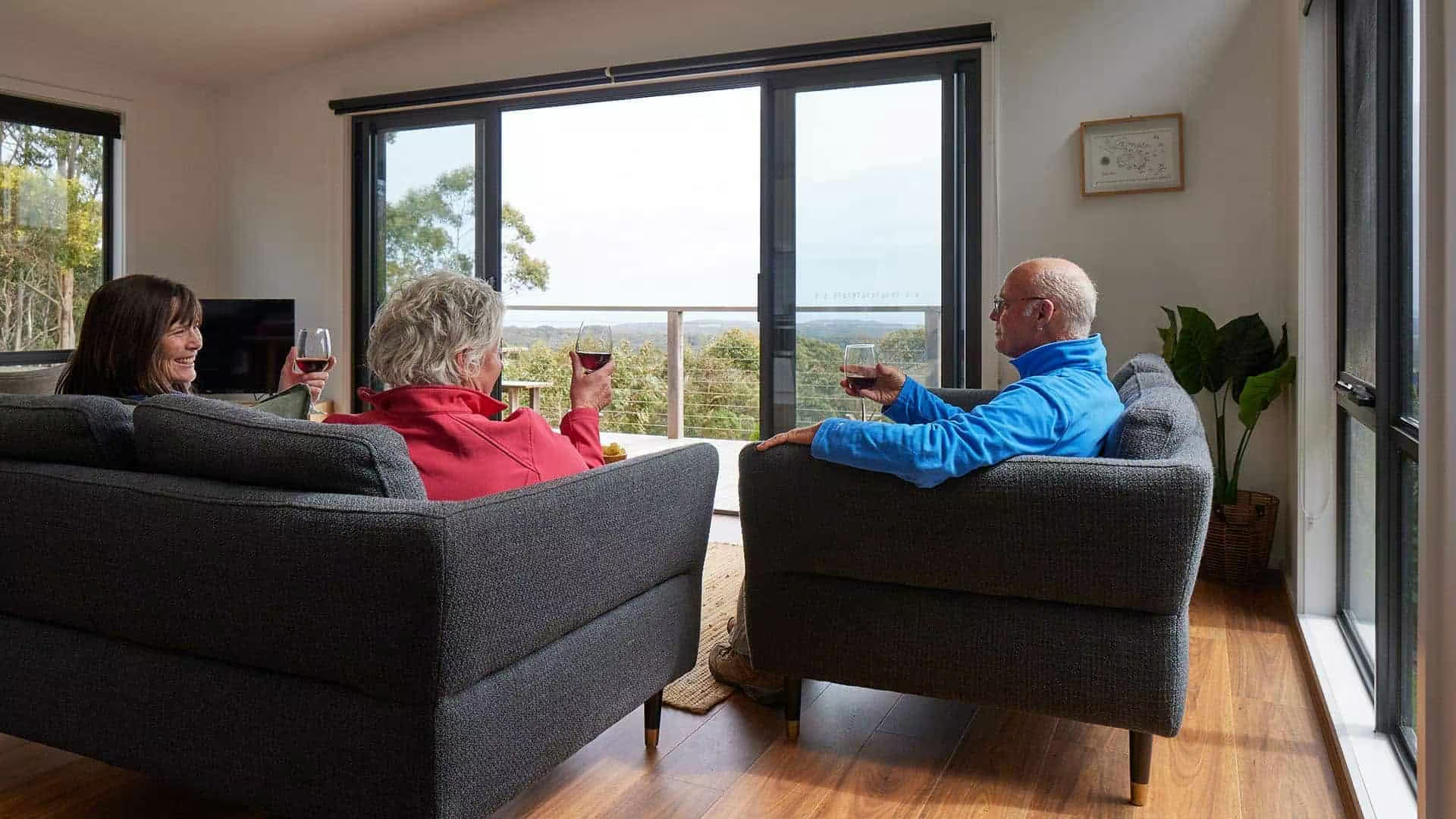
Yes — alcohol is allowed on the Great Ocean Walk.
Most walkers are respectful and keep things low-key. With long days and early starts, people generally prefer a quiet drink rather than late-night noise.
- Drive-in campsites can be noisier during holiday periods
- Hike-in campsites are usually much quieter
Multi-day hikers tend to arrive tired, carry minimal gear, and value a good night’s sleep.

Camping Food Storage
Walk91 can provide storage trailers for packs and water at the campsites, but these are not refrigerated. Non-perishable food is strongly recommended, especially for longer camping itineraries.
A Simpler Option: Mixing Camping, Accommodation & Catering
Many walkers choose a hybrid approach to reduce pressure.
Popular options include:
- 3 nights camping + 2 nights accommodation with meals
- 2 nights camping + 3 nights accommodation with meals
This breaks up the logistics and means you don’t need to plan food for the entire week.
For food safety reasons, Walk91 meals are not delivered to campsites.

Don’t Want the Hassle? Walk 91 Can Help
If organising food, water and logistics feels like more than you want to manage, Walk 91 offers catered and semi-catered options that remove the complexity.
We can provide:
- Accommodation-based catering
- Transport of food and luggage
- Seasonal, locally prepared meals
- Options that work alongside camping itineraries

Preparation is the key ingredient!
The Great Ocean Walk is an incredible experience — but it rewards careful preparation.
Whether you choose full self-catering, a hybrid approach or fully catered support, understanding what’s available (and what isn’t) before you start will make your walk smoother, safer and far more enjoyable.
If you’re planning your Great Ocean Walk and want practical guidance from people who walk it regularly, we’re always happy to help.

No. There are no supermarkets or general stores on the Great Ocean Walk itself. If you are self-catering, you need to buy all provisions before you start or arrange your own off-track resupply.
Not on the track. The walk does not pass through towns or villages. The Cape Otway Lighthouse may have a café at times, but it isn’t always open and should not be relied upon for meals or supplies.
Apollo Bay is the most practical place to stock up before you begin. Most walkers purchase all food, snacks, water and any camping items there prior to starting the walk.
Non-perishable, lightweight foods are best—such as wraps, oats, pasta/rice/couscous, instant noodles, dehydrated meals, canned tuna/beans, nuts, trail mix and muesli bars. Choose items that won’t spoil in warm weather and are easy to prepare when you’re tired.
There is no potable drinking water available on the track itself. Some campsites have rainwater tanks, but availability can’t be guaranteed and tank water should be treated. Walkers should carry enough water for each day.
Yes, but campfires are not permitted at hike-in campsites. If you’re camping, you’ll need a small, lightweight stove for cooking.
Yes, alcohol is allowed. Most walkers are respectful and keep noise to a minimum, especially at hike-in campsites, which are generally quieter than drive-in campgrounds.
Yes. Many walkers choose a hybrid approach—self-catering some nights and using catered accommodation-based nights for others—to reduce the logistics of carrying and organising food for the entire walk.
CONTACT US to start planning your Great Ocean Walk Adventure!
T: +61 3 5237 1189 Or BOOK A CALL Email: info@walk91.com.au
About the Author
Walk91 is a locally owned Great Ocean Walk operator based in Apollo Bay, Victoria. Our team lives and works on the Great Ocean Road and provides self-guided Great Ocean Walk support throughout the walking season, drawing on first-hand knowledge of trail conditions, logistics, and safety planning.