If spotting a wild koala is high on your Great Ocean Walk bucket list, you’re in the perfect place. The Great Ocean Walk winds through some of Victoria’s richest eucalyptus forests, and these lush Otway woodlands offer some of the highest chances in Australia of seeing koalas in the wild.
Local Insight from Walk91
This guide is written by the Walk91 team, locals based in Apollo Bay who live and work on the Great Ocean Walk. We support walkers on this trail each walking season and share practical, first-hand knowledge to help you plan safely and confidently.
Best viewing spots include Shelly Beach, Blanket Bay and the Cape Otway Lighthouse area
One person who knows these forests particularly well is our guide Brad, who has spent decades walking the Otways and reading the landscape. In his recent Shelly Beach video, he explains how to spot koalas in the wild, what signs to look for in the trees and on the ground, and why certain sections of the Great Ocean Walk are true wildlife hotspots. We regularly point out koala habitats to walkers passing through this section of the track, particularly in the early morning and late afternoon.
🎥 Watch Brad’s Koala Spotting Tips (Full Video)

🐨 Koalas of the Otways: What Walkers Should Know
One creature that’s almost impossible to miss along the Great Ocean Walk is the koala. These famously sleepy locals snooze for up to 19 hours a day, making them incredibly easy to spot curled into forks of towering gum trees.

Best-known koala hotspots in the region include:
- Shelly Beach → Blanket Bay (dense manna gum and messmate forest)
- Cape Otway Lighthouse Road (one of the most reliable viewing areas)
- Aire River valley (quiet and rich habitat)
- Kennett River — a popular stop on the Great Ocean Road before reaching Apollo Bay
Koalas choose these areas because the forests here contain their favourite eucalyptus species and are protected by the Great Otway National Park.

Springtime: Look for Baby Koalas (Joeys)
Spring and early summer bring a special treat: female koalas often have a joey clinging to their back or belly. This is one of the most memorable wildlife encounters walkers have along the trail.
Keep a respectful distance — and enjoy one of the sweetest sights in the Otways.

Don’t Be Surprised by Their Night-Time Sounds!
Many walkers are shocked when they hear the noises koalas make at night.
- Males produce a deep, loud grunting bellow — it sounds surprisingly like a wild pig.
- Females screech or squeal during mating interactions.
As Brad says in the video:
“If you hear something that sounds like a wild pig at dawn or dusk… that’s a koala.”

📍 Where to See Koalas on the Great Ocean Walk
Below are the specific Great Ocean Walk sections where Brad (and our walkers) consistently see koalas.
1. Shelly Beach → Blanket Bay
This is where Brad filmed his video — and it’s one of the best koala habitats on the entire track.
The forest here is dominated by:
- Manna gums
- Stringybark messmate
These tall, healthy forests provide food, shelter and perfect climbing conditions. Koalas are often spotted low in the branches in this section.
2. Blanket Bay Campground Area
Quiet, sheltered and rich in eucalyptus trees, this area is a popular daytime resting spot. Koalas are often tucked into forks of manna gums just metres off the walking track.
3. Cape Otway Lighthouse Road
If there is one place with almost guaranteed sightings, it’s the Cape Otway Lighthouse area. This region has some of the densest manna gum populations in the Otways, making it a favourite for both male and female koalas.

🐨 Brad’s Koala Spotting Tips (Straight From Shelly Beach)
In his latest video, Brad walks through the forest at Shelly Beach and shares the exact techniques he uses to spot koalas.
Here are his tips, exactly as he explains them:
1. Know the Trees Koalas Prefer (and Why They Move Seasonally)
At Shelly Beach, the forest is full of manna gum and stringybark messmate.
“Manna gum is their favourite tree. The volatility of the oil in the leaves is very strong, so they like it… But around Christmas time, the oil gets too strong and makes them a bit sick, so they’ll move to the stringybarks and messmate.”
This is why koalas move slightly across seasons — and why both tree types matter.
2. Look at the Ground First — Not the Canopy
Most visitors start by looking up, but Brad explains why the ground gives the best clues.
🍃 Koala leaf piles
“The first indicator is little clusters of leaves around the base of a tree.”
Koalas reach out, snap branches, and drop leaves while feeding.
💩 Scat shaped like a rugby league ball
“Most other things are round… but koala scat has pointy ends.”
This is a strong sign a koala is above you or has been there recently.
🪵 Scratch marks on the trunk
“You’ll see worn-in tracks and claw marks where they climb.”
Check for smooth vertical strips or deep claw grooves.
3. Understand Koala Territory
Brad explains their social structure:
“There’s a dominant male who patrols about a kilometre and a half of manna gum forest.
He has seven or eight girlfriends in his harem, and he protects them from unwanted males.”
This territorial pattern helps explain where koalas cluster — and why they stay spaced out along the trail.
4. Listen at Dawn and Dusk
Koalas are most vocal when they’re active.
- Males grunt loudly
- Females screech if they’re not impressed
- Mating interactions cause quite a commotion
Brad adds with a smile:
“Generally the female always wins… The male will just walk down and go: ‘It’s Tuesday — I’ll go see Maisie today, she’s a bit grumpy.’”
5. When You’ll See Them Moving
Koalas are most active:
- At dawn (feeding, climbing)
- At dusk (patrolling, calling)
During the day, they’re usually curled up, dozing, or blinking slowly at you from a treetop fork.

🌱 Koalas & Conservation in the Otways
The Otways is a delicate and important conservation zone. Koalas thrive here because of:
✔ Diverse eucalyptus species
Manna gum, messmate and blue gum provide year-round food and shelter.
✔ Protected habitat in the Great Otway National Park
Large areas of undisturbed forest create stable koala territories.
✔ Healthy understorey and water systems
Supporting birds, wallabies, reptiles, insects and plant diversity.
✔ Ongoing conservation monitoring
Scientists and local conservation groups in Cape Otway monitor koala health, population density, and tree health to help protect this ecosystem for future generations. Please support Wildlife Wonders when in Apollo Bay – they do wonderful work in the Otways and its a great afternoon of Koala Spotting 🙂
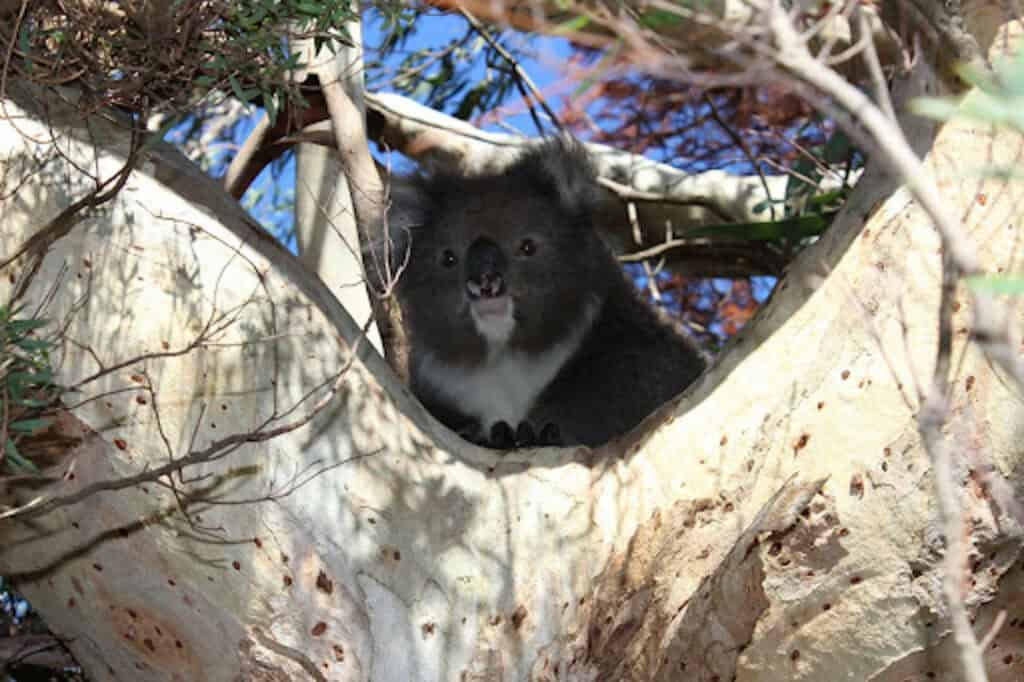
A1: Yes — the Great Ocean Walk is one of the best places in Australia to see wild koalas. They are often spotted between Shelly Beach, Blanket Bay, the Cape Otway Lighthouse area and Aire River, as well as Kennett River on the drive from Melbourne to Apollo Bay.
A2: The most reliable locations are:
Shelly Beach → Blanket Bay
Cape Otway Lighthouse Road
Aire River campsites
These sections have large stands of manna gum, stringybark and messmate — ideal koala habitat.
A3: Koalas are most active around dawn and dusk, when they climb, feed and communicate. During the day, they are usually resting in the forks of eucalyptus trees.
A4: Look for:
Clusters of snapped gum leaves on the ground
Koala scat shaped like a rugby league ball
Scratch marks on tree trunks
Low grunting noises at dawn or dusk
These are Brad’s top signs from years of supporting walkers on the Great Ocean Walk with Walk91.
A5: Yes — in spring and early summer, females often have joeys clinging to their backs or bellies. This is one of the most memorable wildlife moments on the Great Ocean Walk.
A6: Koalas make surprising sounds:
Male koalas grunt loudly to mark territory
Females screech when interacting with males
Many visitors describe the sound as similar to a wild pig — it’s completely normal.
A7: Koalas are not aggressive unless threatened. Keep a respectful distance (5 metres) and never touch or feed them. Quiet observation is best.
A8: Yes — Kennett River is a well-known stop on the Great Ocean Road and often has koalas resting in low branches. It’s a great viewing area before starting your walk in Apollo Bay.
A9: Koalas sleep up to 19 hours per day because eucalyptus leaves are low in energy. Resting helps them conserve energy for feeding and climbing.
A10: Absolutely. Many of our walkers see multiple koalas each day, especially in the forest between Shelly Beach, Blanket Bay and Cape Otway.
We can tailor your itinerary around the best wildlife spots.
🚶 Walk With Us for Your Best Chance of Seeing Koalas
Whether you’re joining a self-guided walk, using our shuttle service, or completing the full Great Ocean Walk, Walk91 gives you the time and space to slow down and look up — which is exactly how people experience the best wildlife moments.
If you’d like your itinerary to include the highest koala-density areas, just mention it in your enquiry and our team will happily tailor your walk.
👉 Explore Walk91 Great Ocean Walk Tours
👉 Contact our local team for personalised advice
Or consider camping or shorter 3 Day Walks:
- 3 Day to 10 Day self-guided walks
- 3-day Mild Side or Wild Side tours
- 6-day Complete Great Ocean Walk
- Custom itineraries
- Camping assistance packages
- Group and corporate walks
CONTACT US to start planning your Great Ocean Walk Adventure!
T: +61 3 5237 1189 Or BOOK A CALL Email: info@walk91.com.au
About the Author
Walk91 is a locally owned Great Ocean Walk operator based in Apollo Bay, Victoria. Our team lives and works on the Great Ocean Road and provides self-guided Great Ocean Walk support throughout the walking season, drawing on first-hand knowledge of trail conditions, logistics, and safety planning.